
Montaigne.
Montaigne writes from himself without turning the self into a foundation. The Essays proceed through returns, examples, contradictions, bodily experience, custom, and changing judgment.
Montaigne’s answer is not a system but a practice of attention to a human being in passage.
A philosophy that stays close to experience.
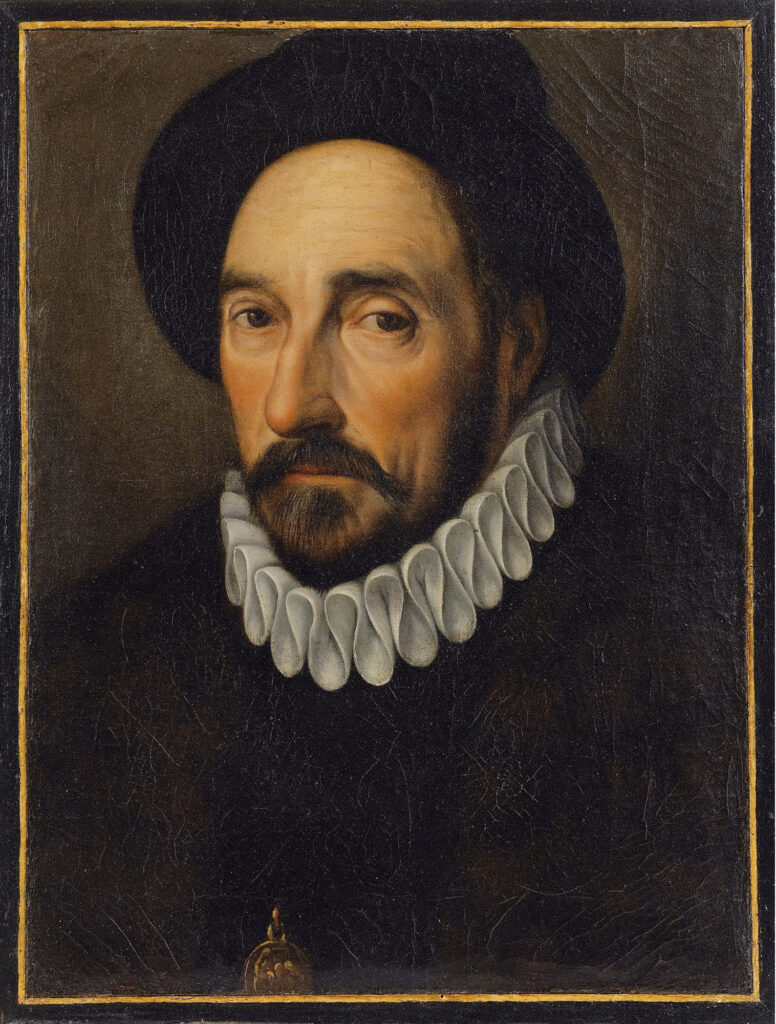
The Essays are neither a manual nor a closed doctrine. They think by trying out positions, revisiting them, and exposing them to experience.
Judgments, habits, fears, pleasures, illness, reading, friendship, politics, and circumstance all become philosophical material. What matters is not extracting an essence from the self, but observing how a life changes while trying to judge itself.
Experience, custom, body, judgment.
Thinking begins from lived variation.
Experience does not provide a final doctrine; it repeatedly tests the adequacy of our judgments.
What feels natural may have a history.
Habit shapes perception so deeply that contingency can appear necessary.
The body is philosophical evidence.
Illness, appetite, fatigue, pleasure, pain, and aging belong to the inquiry rather than standing outside it.
To judge is to remain exposed to revision.
Montaigne’s strength lies less in final answers than in the mobility of a judgment aware of its own limits.
Six points of entry.
These chapters are especially important to the research developed here.
Imagination, body, judgment
How representations can act upon the body and disturb the border between belief and experience.
Custom and plurality
How habit naturalizes what is local, contingent, and variable.
Reason under pressure
The Apology for Raymond Sebond stages conflicts among reasons and deploys skeptical resources against human presumption.
Action, self-portrait, experience
The later essays bring together action, honesty, change, embodiment, and a manner of living without final mastery.
Skepticism transformed into a philosophy of experience.
It is not enough to label Montaigne a “Pyrrhonist” and treat the Essays as a late application of ancient skepticism. The more interesting question is what happens when skeptical resources are absorbed into a writing that follows a changing life.
Sylvia Giocanti is a central interlocutor here because she makes it possible to read skepticism together with inquietude rather than only through the promise of tranquility.
Three essays already available.
The broader Montaigne archive remains mainly in Portuguese. These texts provide genuine English entry points into custom, uncertainty, and skepticism.